Monday, April 22, 2013

Cabeza de Vaca: Supernaturalism and psychosomatic disorders


Andrew Weil, a major proponent of the idea of self-healing (), has repeatedly acknowledged the influence of osteopaths such as Robert C. Fulford () on him, particularly regarding his philosophy of health management. Self-healing is not about completely autonomous healing; it is about healing by stimulation of the body's self-repair processes, which in some cases can be achieved by simply reducing stress.

Interestingly, there are many reported cases of osteopaths curing people from various diseases by doing things like cranial manipulation and other forms of touching. We also have much evidence of health improvement through prescription of drugs that don’t appear to have any health benefits, which is arguably a similar phenomenon.

The number of such reported cases highlights what seems to be a reality about diseases in general, which is that they often have a psychosomatic basis. Their “cure” involves making the person affected believe that someone can cure him, a healer, with or without drugs. The healer then cures the person essentially by her power of suggestion.

Paleoanthropological evidence suggests that this healer-induced phenomenon has always been widespread among hunter-gatherer cultures, so much so that it may well have been the result of evolutionary pressures. If this is correct, how does it relate to health in our modern world?

I am very interested in hunter-gatherer cultures, and I have also been living in Texas for almost 10 years now. So it is only natural for me to try to learn more about the former hunter-gatherer groups in Texas, particularly those who lived in the area prior to the introduction of horses by the Europeans.

There are parks, museums, and other resources on the topic in various parts of Texas, which are at driving distance. Unfortunately much has been lost, as the Plains Indians of Texas (e.g., Comanches and Kiowas) who succeeded those pre-horse native groups have largely been forcibly relocated to reservations in Oklahoma.

Anthropological evidence suggests that the earliest migrations to America have occurred via the Bering Strait, initially from Siberia into Alaska, and then gradually spreading southward to most of the Americas between 13,000 and 10,000 years ago.

Much of what is known about the early Texas Indians is due to Álvar Núñez Cabeza de Vaca, a Spanish explorer who survived a shipwreck and lived among the Amerindians in and around Texas between 1528 and 1536. He later wrote a widely cited report about his experiences ().


(Cabeza de Vaca and his companions; source: Biography.com)

In Spanish, “cabeza de vaca” means, literally, “cow’s head”. This odd surname, Cabeza de Vaca, clearly had a flavor of nobility to it in Spain at the time.

You may have heard that early American Indians were uniformly of short stature, not unlike most people at the time, but certainly shorter than the average American today. Cabeza de Vaca dispels this idea with his description of the now extinct Karankawas, a description that has been born out by anthropological evidence. The male members “towered above the Spaniards”, often 6 ft or taller in height, in addition to being muscular.

The Karankawas were a distinct indigenous group that shared the same environment and similar food sources with other early groups of much lower stature. This strongly suggests a genetic basis for their high stature and muscular built, probably due to the “founder effect”, well known among population geneticists.

Cabeza de Vaca and three companions, two Spaniards and one Moroccan slave, were believed by the Amerindians to be powerful healers. This enabled them to survive among early Texas Indians for several years. Cabeza de Vaca and his colleagues at times acknowledged that they were probably curing people through what we would refer today as a powerful placebo effect.

Having said that, Cabeza de Vaca has also come to believe, at least to a certain extent, that he was indeed able to perform miraculous cures. He repeatedly stated his conviction that those cures were primarily through divine intervention, as he was a devout Christian, although there are many contradictory statements in this respect in his reports (possibly due to fear from the Spanish Inquisition). He also performed simple surgeries.

Much has been written about Cabeza de Vaca’s life among the early Indians of Texas and surrounding areas, including the report by Cabeza de Vaca himself. One of my favorites is the superb book “A Land So Strange” () by Andrés Reséndez, a professor of history at the University of California at Davis ().

The Spanish explorer’s experiences have been portrayed in the film “Cabeza de Vaca” (), which focuses primarily on the supernatural angle, with a lot of artistic license. I must admit that I was a bit disappointed with this film, as I expected it to show more about the early Indians’ culture and lifestyle. Juan Diego, the Spanish actor portraying Cabeza de Vaca, was razor thin in this film - a fairly realistic aspect of the portrayal.

It is quite possible that modern humans have an innate tendency to believe in and rely on the supernatural, a tendency that is the product of evolution. We know from early and more recent evidence from hunter-gatherer societies that supernatural beliefs help maintain group cohesion and, perhaps quite importantly, mitigate the impact that the knowledge of certain death has on the mental health of hunter-gatherers.

Homo sapiens is unique among animals in its awareness of its own mortality, which may be a byproduct of its also unique ability to make causal inferences. Supernatural beliefs among hunter-gatherers almost universally address this issue, by framing death as a threshold between this existence and the afterlife, essentially implying immortality.

Yet, supernatural beliefs seem to also have a history of exploitation, where they are used to manipulate others. Cabeza de Vaca himself implies that, at points, he and his companions took personal advantage of the beliefs in their healing powers by the various indigenous groups with which they came into contact.

Modern humans who are convinced that they have no supernatural beliefs often perceive that to be a major advantage. But there could be disadvantages. One is that they may have more difficulty dealing with psychosomatic disorders. The conscious knowledge that they are psychosomatic could possibly pale in comparison with the belief in supernatural healing, in terms of curative power. Another potential disadvantage is a greater likelihood of suffering from mental disorders.

Finally, those who are sure that they have no supernatural beliefs; are they really correct? Well, subconsciously things may be different. Perhaps a good test would be to go to a “convincing” movie (i.e., not a laughable “B-level” one; for lack of a better word) about supernatural things, such as possession or infestation by evil spirits, and see if it has any effect on you.

If the experience does have an effect on you, even a small one, couldn't this suggest that your subconscious belief in the supernatural may not be so easy to control in a conscious way? I suspect that having no supernatural beliefs is unnatural and unhealthy. In most cases it probably creates a conscious-subconscious conflict, and a fairly pessimist view of the world.

My guess is that it is better to have those beliefs, in some form or another, and be on guard against exploitation.

Sunday, April 21, 2013

Eno - Ono - Oh No

Brian Eno and 77 Million Paintings  
A couple of weeks ago, I had the call from the BBC to be interviewed for the Radio 4 flagship news programme, Today. The story was embargoed until broadcast, so of course, I could’t really share my mounting excitement!

It emerged that Brian Eno had produced some new work for a hospital in Hove and they wanted me to comment on it and talk more widely about the field. First thoughts were - my mind-set is more around public health, wellbeing, participation and democracy - second thoughts were - all publicity for the field is good publicity. So off I went to Media City primed to talk about all things arts and health - from the conference in Bristol, to the National Alliance, and armed to the hilt with anecdotes and evidence. 

The Today Programme health correspondent Jane Dreaper was delightful, welcoming and had done her research, and we spoke for ages, recoding snippets of conversation that I hoped would be a helpful contribution. There’s no denying Eno’s place in art and culture, so it was good to be thinking about work that is not only generative and visually lush, but that conjoined visual imagery alongside music.


You can get an idea of the type of work this is from the above video, but this isn't the actual work.

That the work was in a private hospital*, did come as a bit of a blow - but Jane and I talked about the NHS and how the arts add something to the quality of patient experience within health settings and of course, I waxed lyrical about the potential of the arts and design in the lives of people with dementia, particularly my ongoing collaboration with designer, Darren Browett. We discussed quality of experience in light of the Francis Report and that work goes beyond the ‘icing on the cake’ of healthcare, and of how the small-scale, but beautifully designed Maggie’s Centres transform people’s experience of serious illness.

Thankfully I had clinical research in mind and some of the evidence from the literature around pain management, reductions in anxiety and stress and of course, what every NHS manager wants: reduced patient stays. With a relatively confident interview under my belt, I returned to the reality of MMU and waited.

Embargoed until the Thursday to coincide with the Eno launch, the feature was dropped following the news of the fertiliser factory explosion in the US. I was told it would be rescheduled for the Friday and when the allotted moment came, I waited with baited breath - what on earth would they use? Then in those last glorious seconds following Eno’s anecdotes and passing conversation with someone being treated for cancer, an ‘excited’ blogger was given his fifteen minutes of fame - well 15 seconds to be precise! You can hear Jane's report by clicking on the early Eno below.


eno

So, what would I have talked about, if I’d have managed to squeeze in an extra couple of minutes - or better still - had the opportunity to share what it is the arts/health agenda is all about?

Being a great one for preparing, I’d scribbled key points that I’d somehow hoped to cover and I want to share some of the things we talked about here.

I shared the work of the National Alliance for Arts, Health and Wellbeing and how we relate to other international networks. I had exemplars from the region (I am always impressed by my colleagues in the NW) and gave a plug to the international conference in Bristol this June. But more than all of this, I tried to plant the idea of arts and culture being somehow central to how we think about health and wellbeing in the 21st century. I wanted to sew some seeds around primary care, public health and the medical humanities - and I wanted to suggest that some of the more interesting research around music and health, demonstrates that it is ‘self selected’ music that seems to have potency in clinical settings - and this doesn’t even touch on what we know about participation.

Brian Eno is an advocate for long-term thinking and if his contribution to the field is truly something stripped of ego, his deeply considered and beautiful work is appropriate to heath settings and could perhaps suggest a move from passive background music to patient controlled environments. You can read a fuller interview by clicking on the older Eno below. 


ENO
There’s always a danger that a big name from the art world might distract from the story that we are trying to tell: that creativity, culture and the arts are a potent force for health and wellbeing. Eno’s 77 Million Paintings for Montefiore and The Quite Room are a different breed to the off-the-peg prescribed mural of Michael Craig-Martin’s, Kids in Oxford’s, John Radcliffe Hospital. For me though, the kind of immersive experience that Eno has created should be accessible to everyone, and although the Montefiore** supports 35% NHS patients, I hope that Eno won't see this as a one-off and might want to explore what impact the work has on people and potentially look to an NHS setting for future collaborations.

Over this last decade, we’ve seen some serious investment in the NHS estate and rich art/design collaborations, but we’re only just beginning to enter a new age of austerity and new political ideologies that inevitably question previous government thinking. It seems a lifetime ago that the Department of Health, in A Prospectus for Arts and Health established a policy commitment to the arts, and with a foreword by the then Minister of State for Delivery and Quality, Department of Health, Andy Burnham MP and Minister for Culture, Department for Culture, Media and Sport, David Lammy MP. Let’s remind ourselves of what the very first page declared.

“The Departmen’s policy is that the arts have a major contribution to make to wellbeing, health, healthcare provision and healthcare environments, to the benefit of patients, service users, carers, visitors and staff, as well as to communities and the NHS as a whole.

As inequalities in health and wellbeing seem to be widening, perhaps health settings might be one of the few places that people marginalised by ill health associated with poverty and reduced opportunities, might encounter beautiful and challenging art. Maybe these encounters offer not only fleeting moments of wellbeing, but an introduction to something beyond the tedium and monotony of functional day-to-day survival, giving those working in these settings, the opportunity for meaningful dialogue and exchange. Cultural inequalities take a bizarre twist when you think that, as the NME reported, Eno's compositions wouldn't be available to the general public, with his people stating: "It's true to say that 'The Quiet Room For Montefiore' is an album that can only be heard in the Montefiore Hospital." 

                                   Oh No!

So for my 15 seconds of airtime, what did I achieve? Aside from some introductions to interesting people in the BBC and further afield - and some very kind email - for me at least, it has made me revisit some of the earlier efforts of colleagues in field and the wealth of research that exists that can be built on, and which illustrates the evolutionary nature of the field: a very rich and very diverse thing.

Of course a peak-time feature like this on national radio, is a rare opportunity for sharing ideas more widely, and with an audience of around 7 million, its an opportunity we should embrace. I’m thankful for my small part in it and only hope it opens more opportunity for more debate.


ONO
Two PhD Studentships
The Psychosocial Research Unit invites applications for two part-time PhD studentships approved within the School of Social Work at the University of Central Lancashire. The studentship is tenable for up to 6 years for a PhD (via MPhil route) [subject to satisfactory progress]. The studentship will cover the cost of tuition fees at UK/EU rates. The successful applicant will start on 1 October 2013.

Applicants should bring a psychosocial orientation to their work. Subjects we are particularly interested in at present include the field of socially engaged arts practice, addiction recovery, embodiment, psychosocial wellbeing and psychosocial visual methods. Many of our projects are embedded in community and third sector settings. However, we very much welcome applications from candidates with other interests. Full details at:


* Late News: Did you know that the Montefiore Hospital offer a wide range of cosmetic procedures and you 'can experience state of the art body sharpening and skin tightening? This April, they'll be holding two, yes TWO complimentary cosmetic surgery events, where you can ask as many questions as you like!

** Even later news: Montefiore hires TOP AWARD WINNING CHEF, Mark Haddock - (sorry Hancock). James Dempster, the Commercial Manager at the Montefiore Hospital, said:  “We are making every effort to ensure our patients are as comfortable as possible.  With our theatre-style*** open kitchen and a sushi-bar, food plays a key role in the hospital."

*** good grief - this gives a slightly macabre slant on harvest festival! 

Thank you...C.P.

Sunday, April 14, 2013

The Evolving Health blog is moving to evolvinghealth.wordpress.com

Although I've enjoyed posting from Blogger for five years now, I've found that Wordpress offers me a lot more of the functionality that I need.

So, I hope you'll join me for more posts about evidence-based food, nutrition and medicine updates over at http://www.evolvinghealth.wordpress.com.

Also, don't miss my coverage of Experimental Biology 2013 from April 19-24!

Sincerely,
David

健康のための芸術

Music and Wellbeing? 
Music and Politics more like! 
If you’re Brassed Off with the Thatcher funereal histrionics? Here's Pete Postlethwaite at his sublime best.
Thanks to J.A. for the suggestion. 


Prisoner Soul
In the 1960s and early 1970s, a number of U.S. prisons allowed inmates to form bands and produce commercially available LPs. Today, many of those records are collectors' items. Gary Younge tracks down some of the men who were in these groups, finding out how the music shaped their lives and hearing from those who supported this progressive initiative in the face of the old punitive regime. Click on the image below to hear this excellent programme. 


Standardised Schools
Great article here from Rowan Moore about the new wave of Michael Gove’s ‘standardised, templated buildings for our children’s education.’ Click on the image below to read it.


Two Networking Events in the Pipeline
Some of you attended the networking event where Claire Ford presented her reflections and learning from time spent in the US as part of her Churchill Travelling Fellowship. I’m pleased that Claire has agreed to come to share some of her more recent work around the arts and dementia and her iPad engage project. I expect to announce a date for this evening session over the next couple of weeks. For now, and to whet your appetite, here is a small film that has been produced by my colleagues at the International Centre for Cultural and Heritage Studies at Newcastle University. Although this doesn’t explore Claire’s work using digital technology, it is refreshing and informative and is a very English piece of work when seen alongside the Meet Me at MoMA film - a kind of Mike Leigh and James Cameron comparison perhaps, but do watch them both. They are equally splendid and impacting on the lives of people who could be so disenfranchised from wider society and specifically, from culture and the arts.


Watch the Meet me at MoMA film by clicking on the image below.


I’m also thrilled that my friend and colleague Sarah Lawton is going to share something of her time in India at a networking evening too. Here are some of her thoughts.

An alternative India Report 
Santosh sabse bada dharm loi!!!
The presentation at the North West Arts for Health Network meeting will reflect upon the ‘senses’ and ‘impressions’ of cultural values in India. Sarah Lawton studied for five months at the National Institute of Design, Ahmedabad and undertook a number of personally driven research projects for her MA in Textiles at Manchester School of Art. Engaged in a curriculum, which included the International Open Elective, ‘thrive after fifty five’, she enquired into the cultural differences regarding ageing in Gujarat for people living at different economic levels, in an emerging economy. 

Her research is primarily focused on how engagement with print processes can benefit wellbeing. She is curious about how craft practice and industrial production methods impact on physical health and may benefit psychological balance. Participatory workshop concepts that had previously been tested in an NHS dementia assessment unit in the UK with patients, were revisited and built upon with older Rabari embroidery ladies in Sumrasar, Kutchi. In addition, Sarah worked with block printers in Vasna, carvers in Pethapur, tailors in Ahmedabad, herbal dye specialists in Lambha and applique artisans in Paldi.  The research connected Sarah to people and helped her to understand place, powerfully grounding her practice. Key themes for her future work include ‘the social object,’ the nature of labour division and value of human inter-dependence. Her plan is to trial her Indian artisanal objects in participatory workshops and commercial settings in order to sustain connections between local and International partners.


Arts and older people in care commissioned grant
A £1million Arts and older people in care programme has been launched, jointly funded by the Arts Council and The Baring Foundation. We are seeking proposals from partnerships or consortia led by either residential care providers or arts organisations to deliver a three-year programme providing access to high quality arts experiences for older people in residential care. The starting point for Arts and older people in care programme is that people continue to be creative as they age but in some circumstances they may need specific support from arts organisations to unlock and develop these talents. Click on the photo below for more details of this important opportunity.


Articulate
Venture Arts Celebrates a Voice Through Art
The Lowry, Salford, Quays from 12th April 2013
Venture Arts are proud to announce their fourth major art exhibition ‘Articulate’ at the Lowry, Salford Quays celebrating the talents of their brilliant team of over 70 people with learning disabilities. This new project highlights the importance of personal expression and explores different forms of communication interpreted in creative ways. Many people who work with Venture Arts are non-verbal, have hearing impairments or find it difficult to express themselves through speech; ‘Articulate’ gives these people a Voice Through Art. Click on the image below by Tom and Stephen for more details.


The Wellcome Trust Broadcast Development Awards (UK)
The Wellcome Trust has announced that the next closing date for applications to its Broadcast Development Awards (BDA) is the 26th April 2013.  The BDAs support the development of broadcast proposals in any genre that engage the audience with issues around biomedical science in an innovative, entertaining and accessible way. The Trust are interested in funding individuals and organisations with brilliant early-stage ideas for TV, radio, new media or gaming projects. The funding will enable these ideas to be developed into high-impact, well-researched proposals that can be used to secure a broadcast platform and/or further funding. Development funds might be used to undertake thorough research, create a taster tape, develop a script, or build a game prototype or mood reel. The project should primarily be aimed at a mainstream UK and/or Republic of Ireland audience in the first instance, although the subject matter can be international. Broadcast Development Awards are up to £10 000, for a maximum of one year. Read more at: http://www.wellcome.ac.uk/funding/public-engagement/Funding-schemes/Development-Awards-Broadcast-Gaming-and-Film/index.htm


Funding for Links with Japan (UK)
The Daiwa Foundation which supports closer links between Britain and Japan is seeking applications under its small grants programme. Grants of £3,000 - £7,000 are available to individuals, societies, associations or other bodies in the UK or Japan to promote and support interaction between the two countries. Daiwa Foundation Small Grants can cover all fields of activity, including educational and grassroots exchanges, research travel, the organisation of conferences, exhibitions, and other projects and events that fulfil this broad objective. New initiatives are especially encouraged. 

The next closing date for applications is the 30th September 2013. Read more at: http://www.dajf.org.uk/grants-awards-prizes/daiwa-foundation-small-grants 

£100k Funding Available for Charities in Tameside 
The Lloyds TSB Foundation for England and Wales has announced that as part of its Community Programme it has over £100,000 available to award to charities working in Tameside that support disadvantaged people.  The Foundation supports registered charities whose core work helps disadvantaged people to play a fuller role in communities.  The Foundation is particularly interested in work that achieves this through improved social and community involvement; improved life choices and chances and helping people to be heard. Charities and take the short eligibility questionnaire or call 0870 411 1223.  Read more at: http://www.lloydstsbfoundations.org.uk/PressandMediaCentre/Pages/TAMESIDESIGHTRECEIVES£19,700GRANT.aspx  


Healthy Hearts Grants (UK)
Heart Research UK has announced the next funding round under  its Healthy Heart Grants Scheme will open on the 1st July 2013.  Heart Research UK Healthy Heart Grants support innovative projects designed to promote heart health and to prevent or reduce the risks of heart disease in specific groups or communities. Grants of up to £10,000 are available to community groups, voluntary organisations and researchers who are spreading the healthy heart message. The closing date for this funding round will be the 31st August 2013. Read more at: http://www.heartresearch.org.uk/grants/healthyheartgrant 
Thank you for visiting this blog and get in touch about anything...C.P.

Tuesday, April 9, 2013

Why we should adopt a "zoobiquitous" approach to health

Image
We are all animals. It's a fact that may be unsettling for some, but for others it is a fountain of understanding and of inspiration. Since 1859, thanks to Charles Darwin, our place in the animal world has been firmly established. Yet, to this day, it is all too common within medicine (and nutrition) to have the tendency to develop a narrow-mindedness about ourselves that disconnects us from the natural world. Rarely do medical doctors ever look beyond, to other animals, for a broader perspective about their fields. As the veterinarian insider joke goes, "What do you call a physician? A veterinarian who can only treat one species." 

 This is where zoobiquity (a different, zoobiquitous approach to medicine) comes in.

What is zoobiquity? When a story of how two obese Alaskan grizzlies lost hundreds of pounds helps inform nutritionists about how they might advise their human patients on weight management, you could say that is an example of zoobiquity. When a psychiatrist finds she is able to kindly comfort a patient diagnosed with anorexia by pointing out that an eating disorder is nothing ashamed of and that, in fact, it is quite common across several species, that's zoobiquity. And, when a veterinarian oncologist and human oncologist come together to discuss the similarities of their animal and human patients and share data in an effort to improve medical outcomes of their patients, that's zoobiquity.


The term, a merge of the words "zoo" and "ubiquity," was coined by UCLA cardiology professor Barbara Natterson-Horowitz, M.D., and science journalist Kathryn Bowers as a way to describe their call for a coming together of three scientific fields: human medicine, veterinary medicine, and evolutionary biology. The duo also used the word as the title of their book, Zoobiquity: The Astonishing Connection Between Human and Animal Health, the paperback version of which has just gone on sale today. I highly recommend you purchase a copy to read even if you are not necessarily interested in medicine; the book is still worth the read because of what Bowers calls "cocktail party fodder."

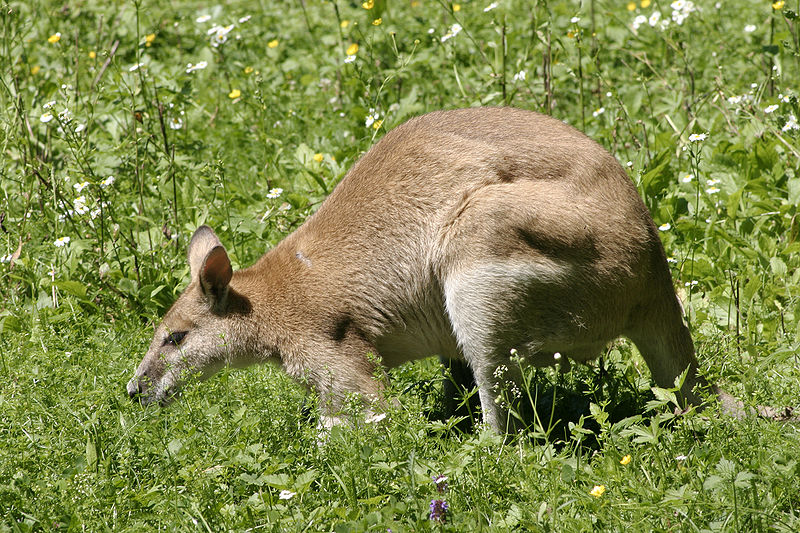
In the book, for example, you'll learn all sorts of interesting facts: that dinosaurs also suffered from cancer, that fish faint, that horses suffer from sexual dysfunction, that all sorts of wild animals can at times develop eating disorders or overeat and become obese, that koalas suffer from chlamydia, that birds self-injure, and that wallabies get stoned. A passage that best sums up the message of the book is this one about breast cancer resulting from a genetic mutation of the BRCA1 genes that is shared among different species: "When it comes to breast cancer, a jaguar originating in South America and an English springer spaniel in Sweden might be medically more relevant to an Ashkenazi Jewish woman than her next-door neighbor is."

What led me to read the book was a long-held fascination with the topic of how health in the animal world relates to the human world. Because of my interest, I sought out a conversation with the co-authors and, now, I'm delighted to offer you this interview from last Sunday:   

Edited interview with Zoobiquity authors

DESPAIN: How did you come up with the term, zoobiquity?

DR. NATTERSON-HOROWITZ: We had been thinking a lot about all these overlaps from everything from cancer and heart disease to obesity to eating disorders in adolescence. We were looking for clinically relevant points of intersection that brought together human medicine, veterinary medicine, and evolutionary biology. And we found ourselves really struggling to describe it not only other people, but for our own purposes. There wasn't really a word that would describe bringing these three fields together. So we decided to coin our own word. We tried to find a word that brought together elements we wanted. So, "zoo" and "ubiquity"  became "zoobiquity."

wallabyDESPAIN: What's your favorite example of zoobiquity?

BOWERS: I'm really interested in the shared physiology that we have across species. That seems in some ways the lowest-hanging fruit, that we share blood and bones and other physiologic systems with other animals. I've been really interested in the crossovers in the psychiatric realm, how animal behavior and human psychiatry have more in common than we thought. What in humans we might call a mental illness, or eating disorders, or anxiety, or obsessive-compulsive disorder. In our book, we have examples of self-injury. If a human was exhibiting this, they would be taken to a psychiatrist. We think of them as maybe being part of our human cultures, but they're actually shared with other animals because the roots may be even deeper in mechanistic or physiologic areas that create behaviors seen across species.

DR. NATTERSON-HOROWITZ: When psychiatrists typically think about problems like cutting, or anorexia, or bulimia, there's a tendency to think about those problems in a pre-frontal cortex capacity. Psychotherapists use language to access those symptoms and to treat them with talking therapy. The idea that animals would share these in the first place required us to take a little bit of a step that's longer than what we typically do when we think about animals.

DESPAIN: One of the chapters in your book is about the "Fear of Feeding". This is related to what you're talking about.

DR. NATTERSON-HOROWITZ: If you look at the fear of feeding or of eating disorders, you find that psychiatrists will tell us that, in human beings, most patients diagnosed with an eating disorder will also have an anxiety disorder. It's common to have a comorbic psychiatric condition if you have an eating disorder. So if an anxiety disorder is extremely associated to eating disorders, what does that tell us? Well, it suggests that there's something about eating that connects to fear. And, you start looking at connections between fear and eating in the animal kingdom and it becomes very clear that an unsafe environment absolutely affects animal eating behavior. We have examples of that: an environment that has a high density of predators where there's a lot of risk, prey animals may restrict the amount they eat, the time they eat, perhaps the range of where it eats. When the predatory threat is reduced, the animal is more relaxed and the animal gets fatter, because the animal eats over a greater period of time. When you look at a human patient with anorexia, when they're in the throes of the disease, when they are  extremely anxious, you see their eating is highly restricted. As the treatment continues and is hopefully successful, and as anxiety is reduced, there's this loosening up, a relaxation of eating. We think that parallel speaks to this highly conserved neurophysiologic system, whether it is the autonomic nervous system, or whether its mammalian or even pre-mammalian, it really suggests these are highly conserved systems. This is a new way for psychotherapists and psychiatrists to think about these eating disorders in human patients.

BOWERS: Barbara has mentioned predatory stress, but there's even the idea of social stress. Social stress can affect animals and their eating either by where they are in their social hierarchy or almost by the way they need to behave. We were just talking with Iain Couzin who was giving a lecture at UCLA and he was describing locusts swarms and how big a deal cannibalism is in the way that those animals organize their group behavior, so even just putting something like eating and social movement in the same arena, I think, really opens up what a human nutritionist might be able to think about when counseling a single human being.

DESPAIN: Being a nutritionist, one of my favorite chapters in your book was Fat Planet where you tell the story of two obese Alaskan grizzlies Jim and Axhi who were treated at Chicago's Brookfield Zoo by nutritionist Jennifer Watts. Watts changed their diet and lifestyle in ways that was informed by knowledge of their natural ecology. It wasn't a "perfect wild diet" -- as that's fantasy -- but there were changes like considering the environment's cyclical periods of abundance and scarcity as well as season's effect on their intestinal microbiomes. Previously, I've written about nutritionists doing similar things both with lemurs and Komodo dragons that suffer from obesity and diabetes. What would you say are the key takeaways in dietary advice that humans can learn from your examples?

DR. NATTERSON-HOROWITZ: There were so many surprises that we encountered in researching the book. One early misconception that we bumped up against was this idea that only human beings overeat. There seems to be this fantasy that animals in their natural setting have internal regulatory systems that would result in eating only to satiety and that would be it. This idea was so wrong. We now understand that, actually from an evolutionary perspective, animals are likely to encounter periods of scarcity. And, when they encounter periods of abundance, they are going to absolutely overconsume and sometimes spectacularly overconsume. That was already the beginning of a set of really surprising findings. If there's abundance and there's no predatory threat, they'll just consume and consume. The other real biggie was that (and I went to medical school and, for 20 or 25 years, have been practicing medicine), I've seen a lot of overweight and obese patients; it's pretty much been assumed until very recently that it was all about calories in, calories out. I think most physicians have had patients that say they are not losing weight, and they swear to you that they're eating 900 calories a day -- do you really think that that's true? I think most physicians would be skeptical and think that their patients are probably not telling the truth or not aware of how much they're eating. So one of the exciting and surprising aspects of researching this chapter was to learn about all of these other factors that go beyond calories in and calories out. These could very well be influencing metabolism in both individual human patients and other species as well -- things like the seasonal microbiome, and circadian variation, even climate change, endocrine-modifying chemicals, and perhaps antibiotics in the environment. These are really interesting ideas to think about even in [the context of] the obesity epidemic as not being isolated to human beings, but perhaps being more species-spanning.

BOWERS: Even the approach that a physician or nutritionist might take with a human being, we think might be expanded and informed by the way veterinarians treat their animal patients. Because a veterinarian is not usually  going to treat their patient as an individual, but really going to look at them as part of a group in an environment -- that's the social environment built around the animal.  In human medicine, we put a lot of it on the patient -- you're eating too much and you need to exercise more. A veterinarian would really think about what's going on around the animal that makes them overconsume.

DESPAIN: Gut length variability throughout the season was something I'd never heard of until I read your book. I found that fascinating.

BOWERS: We were pretty intrigued by that also. We were really interested in the idea that gut length could vary seasonally in the same animal. It can lengthen and expand.

DR. NATTERSON-HOROWITZ: Kathryn and I had a lot of these fun moments. If you take a look at the human small intestine, and even if you look at the colon, you see this ribbon of smooth muscle. What is that smooth muscle for? Yes, it's involved in peristalsis [intestinal movement], but perhaps there are factors involved in lengthening and shortening the gut. Even if it was only 5 to 10 percent that would be quite significant over a long period time. Then again, the overarching point of the book is to look at a human patient as a human-animal patient and think of them comparatively, which is not something that we learn about in medical school these days.

DESPAIN: You say that working with veterinarians changed how you practiced human medicine. What do you think medical doctors can gain from this perspective?

DR. NATTERSON-HOROWITZ: You know, it's funny, people have asked the question in a different kind of way. Why is there resistance? What are the barriers? What is the benefit? Is there a benefit? Is there a way to teach medical students in a better way and will they be better doctors? Will this result in the creation of new hypotheses that will lead to new knowledge The answer is that we believe that they will. These are early days so there are only a couple of areas where we've seen leaps from this approach and we expect there will be more. There really have been two areas where there has been quite a lot of work done. The first is in the area of cancer research. The National Cancer Institute, about 10 years ago, started the comparative oncology program. And that program is looking at cancers that occur spontaneously in humans and mostly dogs and cats (companion animals). We're talking about osteosarcoma, which is a very serious bone cancer that affects adolescents and large-breed dogs. The biology of the cancer is very similar between the two species. There's a lot that can be done to understand tumor biology and clinical course by looking at dogs. If you just look at oncology, there's been real advances through a comparative approach. The other area where human medicine can absolutely benefit, through the lens of evolutionary biology, is the issue of antimicrobial resistance. There are some excellent and fascinating models that look at the emergence of resistance in an evolutionary context. At UCLA, we, as well as a chairman of evolutionary biology, started a program in evolutionary medicine and we had a wonderful speaker, Andrew Reid, that is talking about trying to evolution-proof antibiotics. So, there's many areas around this issue of infection and antibiotics where we can gain from working collaboratively with the veterinary world.

DESPAIN: What do you think is a benefit from a patient's perspective? For example, I have joked in the past that the real reason why I decided to become a nutritionist and never pursue medicine is because I faint at the sight of blood or even when someone draws blood from me -- I've found this incredibly annoying. Now, from your book, I've learned that I share that phenomenon with several animals including fish and perhaps it may even have a protective effect in survival terms -- beyond the fight or flight response. Do you find that your patients find comfort or understanding in knowing they share their circumstances, say like cardiovascular disease, obesity, or cancer, with animals?

DR. NATTERSON-HOROWITZ: It really varies. This message really resonated with us. The fact that animals can self-injure, get addicted, get obese, get anorexia nervosa, or have self-induced vomiting -- I think for some patients it can be profoundly de-stigmatizing. There's this kind of human grandiosity that our disorders are human disorders and that we are so uniquely disordered. That we have this spectrum with other animals is very humbling, very connecting, very destigmatizing, very deshaming. For some patients, it might not have that affect, but for some I think it has.

DESPAIN: Your book has been out a year now. How do you think your approach has been received? I see there's now an annual conference. What kinds of people turn up at this event?

BOWERS: We're having our third conference this fall. It's a place where we are really trying to make this happen. We're putting out a rallying cry. The conference is for working physicians and working veterinarians and we're really excited about the next one. It's going to be in New York City with faculty from Cornell, and NYU, and the Bronx Zoo. There's one group that has understood it from the very beginning: that's the veterinarians. But we're starting to get the message out to physicians as well and even general patients. We also get letters from general readers, and teachers, and its bolstering their interest in biology and evolution.

DR. NATTERSON-HOROWITZ: It's fun because we have an auditorium full of half Ddms and half MDs, all very prominent academics. On stage, we've had a veterinarian oncologist and then we've had a human oncologist. And the veterinarian comments on the human case, and the human oncologist comments on the animal case. We also did that for heart disease. Then, everyone grabbed boxed lunches and we went on "walk arounds" (like in a teaching hospital) at the zoo. We had the veterinarians there and we were trying to make the point that we're all doctors. So we wanted to start the conversation.

DESPAIN: Barbara and Kathryn, thank you for your time.

DESPAIN: I found Zoobiquity a lot of fun to read, extremely entertaining, and also offered plenty of useful facts I can use to entertain with at a party.

BOWERS: Cocktail party fodder!

Photo credits: Wikipedia.

Monday, April 8, 2013

Dried meat: Homemade beef jerky


You can dry many types of meat, including beef, pork, goat, deer, and even some types of seafood, such as mussels. Drying meat tends to significantly increase the meat’s protein content per gram, often more than doubling it. It also helps preserve the meat, as bacteria need an aqueous environment to grow; adding salt helps further prevent bacterial growth.

Dried meat preparation and consumption was common among the Plains Indians (e.g., of the Cheyenne, Comanche, and Lakota tribes), and also a valuable trade item for them. They often ground the dried meat into a powder, mixing fat and berries with them; the result of which was pemmican. Many other hunter-gatherer cultures around the world have incorporated dried meat into their diets.

Below is a recipe for homemade beef jerky, which is very close in terms of nutrition content to the dried meat of the Plains Indians's time; that is, the time when the Plains Indians subsisted mostly on bison. Commercial beef jerky typically has a lower nutrient-to-calorie ratio, in part because sugar is added to it. The recipe is for beef jerky, but can be used to make jerky with bison meat as well.

- Cut about 3 lbs of beef muscle into thin strips (see photo below). Ideally you should buy it partially cut already, with most of the fat trimmed. Cutting with or against the grain doesn’t seem to make much difference, at least to me.

- Prepare some dry seasoning powder by mixing salt and cayenne pepper.

- Season the strips and place them on a tray with a grid on top, so that the fat that will come off the meat is captured by the tray and doesn’t drip into the oven.

- Preheat the oven to about 180 degrees Fahrenheit, and place the strips in it until you can easily pull a piece of the meat off with your fingers (see photos below, for an idea of how they would look). This should take about 1 hour or so. You will not technically be “baking” or "cooking" the meat at this temperature, although the digestibility of the final product will be comparable to that of cooked meat – i.e., greater digestibility than raw meat.

- Leave the strips in the oven until they are cold, this will dry them further.


Homemade beef jerky, prepared as above, is supposed to be eaten cold. In this sense, it could be thought of as a bit like salami, but with a higher protein-to-fat ratio. If your kids eat this on a regular basis, I suspect that their future orthodontist needs will be significantly reduced. Homemade beef jerky, like the commercial one, requires some serious chewing.

The dried strips of meat can be kept outside the fridge for a long time, but if you intend to keep them for more than a few weeks, I would suggest that you keep them in the fridge. Interestingly, adding sugar apparently increases the non-refrigerated shelf life of beef jerky even further. It doesn’t improve the flavor though, in my opinion.

This is a zero-carbohydrate food item, which may be a good choice for those who are insulin resistant or diabetic, and also for those on low-carbohydrate or just-enough-carbohydrate diets. Often I hear bodybuilders who eat multiple meals per day to say that it is hard for them to prepare high-protein snacks that they can easily carry with them. Well, beef jerky is one option.

Sunday, April 7, 2013

Яна памерла


THREE THINGS
Crushed by the weight of all things, this week sees a sparse blog. Sorry. To mark the passing of Mrs Thatcher, I offer some snippets from the real world. Relevant to us? Relevant to you? You decide. 


1.TOXIC


The designer Katharine Hamnett is depressed at the ongoing nuclear arms debate. You can read an interview with her by clicking on her photo above and you can find out more about the world of Trident by clicking on the poster below.


I’ve shown it before and I make no apology for showing it again. Japanese artist Isao Hashimoto has created a series of works about nuclear weapons. This one is titled “1945 - 1998”and shows a history of the world's nuclear explosions. Over the course of fourteen and a half minutes, every single one of the 2053 nuclear tests and explosions that took place between 1945 and 1998 are is plotted on a map.


2. CHANGE THE WAY YOU THINK AND ARE
Here’s great article about Rachel Whiteread too. Here’s an interesting quote:
"What I'm not into is what I call 'plop' art. Making things and just putting them in places for the sake of it. I don't like much sculpture in the street. It really needs a reason for being there, but when it does, it can be a wonderful thing. I don't think art changes the world in terms of stopping people dying of Aids or of starvation or being homeless. But for an individual, seeing a great piece of art can take you from one place to another – it can enhance daily life, reflect our times and, in that sense, change the way you think and are."


3.CANCER
Writer, Iain Banks announced he is "officially very poorly" with cancer and may have only months to live. He commented: "I've withdrawn from all planned public engagements and I've asked my partner Adele if she will do me the honour of becoming my widow (sorry – but we find ghoulish humour helps)."  This week there have been one or two deeply interesting articles by and about Banks including, why he refuses to let his work be sold in Israel and supports a cultural boycott.

That’s it. Short and sweet. Nothing else, Nada - Gone.